
Welcome to
Shiksha Learning Centre
📍Based in Himachal Pradesh | A UMMSSO Initiative
Message from the Founder
During the COVID-19 lockdown in Himachal Pradesh, we found ourselves in a remote village where the harsh reality of educational inequality was impossible to ignore. Tribal children from the Gaddi community were completely disconnected from online learning — they had no smartphones, no internet, and no understanding of why schools were suddenly shut. It was heartbreaking to see them idle and confused, unaware of what a “lockdown” even meant. They had nothing to do, no one to guide them, and no access to learning.
What began as a small effort to help them with homework quickly uncovered a massive learning gap. With encouragement from a few colleagues, we rented a small room and started informal classes, using whatever resources we could gather. This humble beginning led to the birth of Shiksha Learning Centre on 15th September 2021, dedicated to the education and upliftment of tribal children.
To our surprise and deep emotion, on the very first day of registration, nearly 100 children arrived at our centre, eager to learn. That moment filled our hearts with hope — and anxiety.
Who among them truly deserved a seat? How could we turn any of them away? With extremely limited resources and unpredictable mountain weather, it was a challenge we hadn’t anticipated. But instead of turning children away, we welcomed everyone with open arms, determined to give each child a fair chance.
Since then, Shiksha Learning Centre has become a beacon of hope. Focused on the holistic development of Gaddi tribal children, we have blended learning with joy — teaching English, Math, Science, and life skills in a nurturing, inclusive environment. Even after the pandemic eased, we chose to continue the initiative, committed to bridging the educational divide.
Now, nearly four years later, these once-forgotten children are not only scoring distinctions but also speaking with confidence, dreaming bigger dreams, and walking the path of opportunity with self-belief. Shiksha is no longer just a centre — it’s a symbol of resilience, love, and the power of inclusive education.
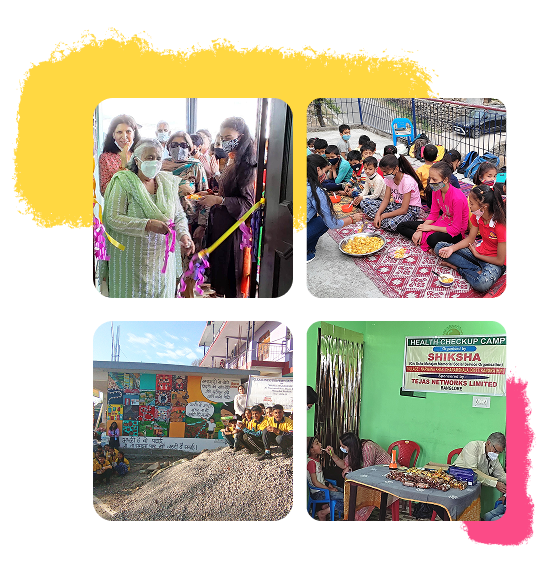
Shiksha Learning Centre – From Chalkboards to Change: A Tribal Education Journey
Born out of a simple belief, Shiksha Learning Centre under UMMSSO was
founded on the idea that education is the key to a brighter future—and that
every child, regardless of their background, deserves the chance to learn, grow,
and thrive.
Our mission is clear and impactful: to offer free, quality Education to children from the semi-nomadic Gaddi Tribe and other economically disadvantaged communities, helping them break the cycle of literacy and envision a life full of possibilities.
Located in the heart of Village Narwana Khas, Dharamshala (District Kangra, Himachal Pradesh), we are a community-driven initiative committed to transforming lives through education. Established in September 2021, we are the only NGO working in this remote region to bridge the vast educational divide that continues to hinder childrens development.
We provide broad exposure through both academics and a wide range of Extracurricular Activities to a tribal community where education was never seen as a priority. It took relentless effort and unwavering dedication to ignite the value of education within the village—and today, that spark is turning into a lasting flame of hope and progress.
Seeing the growth in the children’s academic understanding strengthened our belief in continuing this initiative. We created a space where they had the freedom to speak, laugh, and explore experiences beyond farming and traditional schooling. Through every interaction, we aimed to widen their circle—opening their world to curiosity, creativity, and confidence.

Programs That Make a Difference
Nivam — Junior Learning Block
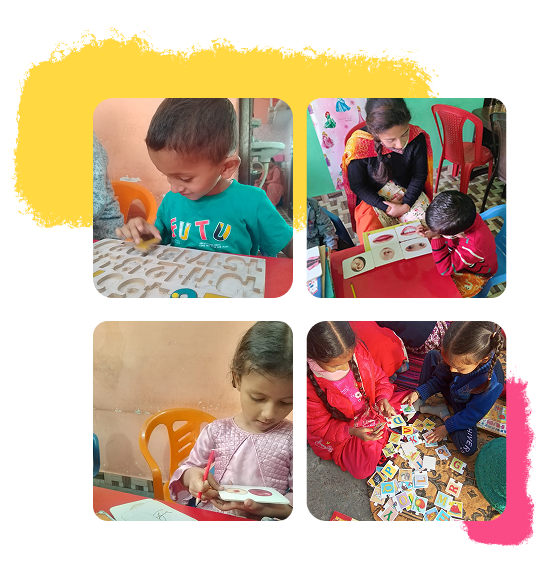
An Educational Program for children aged 3 to 10, is a vital initiative of Shiksha Learning Centre. This program plays a foundational role in nurturing young minds and shaping their futures. During our initial assessment after inaugurating Shiksha, we realized that educating middle school children was a significant challenge. Most had already crossed the age where grasping basic concepts comes naturally and were overwhelmed by heavy textbooks and a rigid school syllabus, leaving little room for understanding or growth.
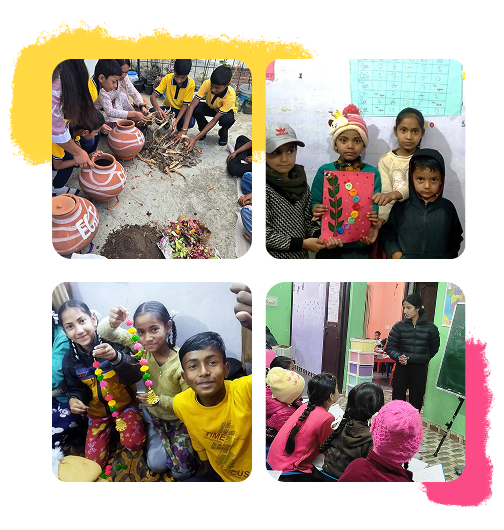
Recognizing this gap, we chose to focus our attention on early childhood education, where the potential to build a strong and lasting foundation is the greatest. Through Nivam, our young learners engage in much more than academics — they sing rhymes, play board games, explore creativity, and participate in a range of joyful, experiential activities that nurture their social and emotional development.
We not only provide them with basic education but also give special attention to their health and well-being. Regular health checkups, nutritious snacks, and hygiene awareness sessions are an integral part of the program. By ensuring that our children are physically healthy and emotionally secure, we create an environment where learning can truly flourish.
Their bright smiles, infectious energy, and eagerness to learn continue to inspire us every day and reaffirm our belief that investing in early education is the most powerful way to build a better future.
Avinya – A Girls' Empowerment Initiative
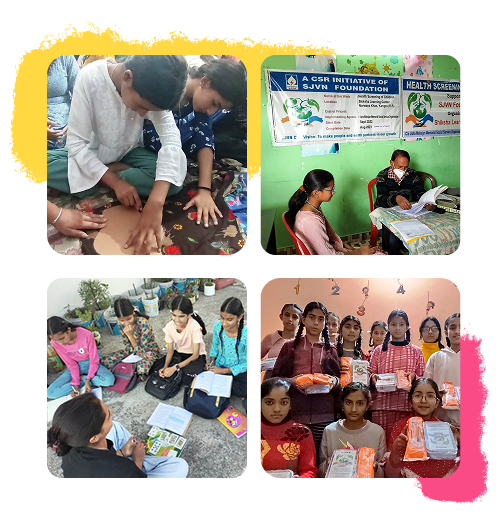
Our second key initiative, is dedicated to empowering young tribal girls who face multiple layers of challenges. These girls were not only struggling to cope with their academic curriculum but were also grappling with serious health issues. Many of them suffered from acute anaemia, lacked proper nutrition, and received little to no medical attention. In addition to academic stress, they were burdened with physically demanding fieldwork alongside their parents, leaving them exhausted and emotionally drained.
Recognizing their vulnerability, we launched a sustained girl-child-focused program rooted in sensitivity and care. Through Avinya, we conducted regular health checkups, distributed essential medicines, and ensured timely interventions. Each girl received personalized academic support through one-on-one sessions tailored to her pace and understanding. Beyond education and health, we also introduced them to life skills and essential knowledge — such as making sustainable menstrual products, learning hygiene practices, and accessing basic clothing and educational materials.
Today, these girls walk with newfound confidence. Most importantly, they have begun to voice their thoughts, share their concerns, and openly discuss the problems they once kept hidden. Avinya has become more than just a program — it is a safe space where young tribal girls are seen, heard, nurtured, and empowered.
Manthan- Middle Grade Section
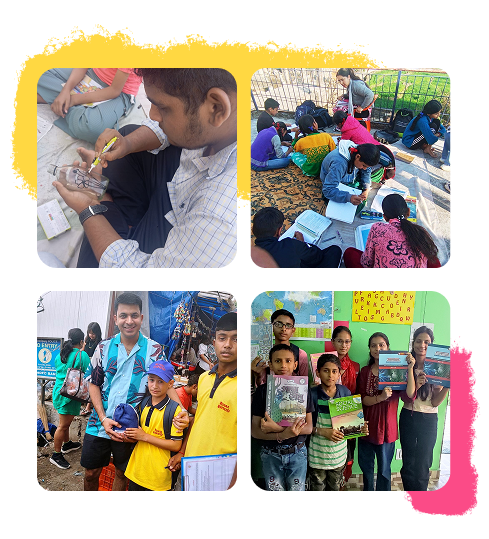
Manthan is a dedicated after-school education initiative designed for middle and senior children aged 10 to 16 from the Gaddi and OBC communities. We provide free, supportive learning opportunities that go beyond textbooks—helping children understand and engage with their surroundings while addressing their academic challenges in an accessible and enjoyable way.
Our program includes group discussions, mental math exercises, and interactive activities that make learning fun and meaningful. We offer extra classes for students who need additional support, ensuring no child is left behind. We also conduct regular screening to identify students with exceptional talents or aptitude in specific subjects, enabling us to guide them towards promising and fulfilling career paths.
Through Manthan, we aim not only to improve academic performance but also to boost confidence, critical thinking, and curiosity. We believe education should empower children to dream big, make informed decisions, and become active, aware members of their community. Our ultimate goal is to nurture a generation that is both rooted in their cultural identity and prepared to embrace a bright future.
Our Strategy to Uplift Tribal Education Through Thoughtful Planning
At Shiksha Learning Centre, our Educational approach is thoughtfully structured around the existing school schedule, pedagogical gaps, and the significant disparity between students’ academic levels and the curriculum delivered in mainstream schools. Children attend our program after regular school hours, where each child undergoes an initial academic assessment. Based on their individual learning needs, we design a personalized academic intervention plan.
Our primary focus is on strengthening foundational concepts—even for students enrolled in middle or higher grades—especially in General English, Literature, Mathematics, and Science. We emphasize conceptual clarity and remedial education, ensuring no child is left behind due to past learning deficits.
In addition to core academics, we integrate co-scholastic and enrichment activities into the curriculum. Special emphasis is given to Art and Craft, Environmental Awareness, Digital Literacy, and Hands-on Science Activities, as we believe that experiential and visual learning fosters deeper understanding and long-term retention compared to conventional rote learning.
Recognizing that every child is unique, we identify learners who exhibit specific learning difficulties or require additional support and provide them with individualized instruction. This inclusive education model ensures that they are gradually reintegrated into the mainstream peer group with confidence and competence.
Today, children who attend Shiksha stand out in the village—not just in terms of academic improvement but also through their enhanced self-esteem, communication skills, and overall awareness. They are more confident, curious, and informed—qualities that reflect the transformative impact of our initiative.
Our Primary Wing – Shaping the Future, One Child at a Time
Our hearts sank when we first encountered middle and senior-grade students struggling with the most basic reading and writing skills. These were children who, by age and grade, should have been engaging with academic textbooks and comprehending complex mathematical formulas or scientific theories. Instead, they were lost—unable to decode simple sentences or perform basic arithmetic. This was a wake-up call for us, a moment of deep realization that a strong academic foundation is not just important—it is essential.
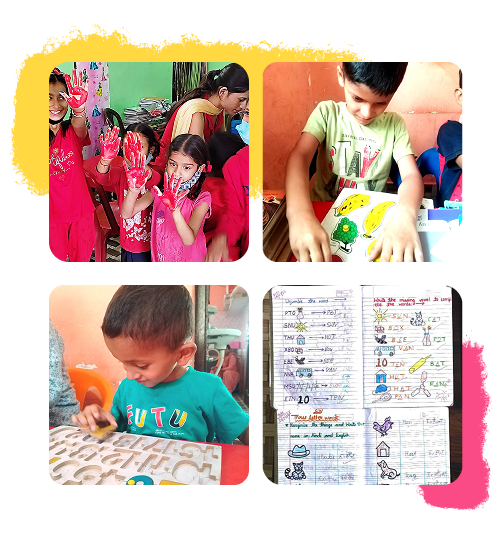
This experience became the turning point in our approach. We made a conscious decision to intervene early and focus intensively on building a robust foundation for younger children, especially those who had not yet been enrolled in formal schooling. Our team designed a developmentally appropriate, child-centred program that began with the very basics—phonetic awareness, number recognition, and identification of fruits, vegetables, animals, and daily-use objects.
This early intervention proved to be highly effective. We were able to engage children at the right time, before educational gaps widened beyond repair. Today, these young learners are not only able to read and write with confidence but also demonstrate the ability to interpret pictures, express themselves in simple English, and even write in cursive script with pride.
We strongly believe that a solid academic foundation in the formative years not only builds confidence but also prepares children to meet future academic expectations with clarity, curiosity, and self-assurance. It empowers them to participate meaningfully in their education and breaks the cycle of struggle that we witnessed in older students.